Upgrading to one of the largest sensors in the world - enter the Fuji GFX100ii

I remember way back in early 2024, I was looking into getting a camera to replace my Sony ZV1 MK1 that I was using for casual YouTube video work. At that stage, I wasn't really into photography in any serious way. I had a bit of a lightbulb moment, I figured what if I bought a serious professional camera instead of just using my iPhone for photography and this ZV1 for video work?
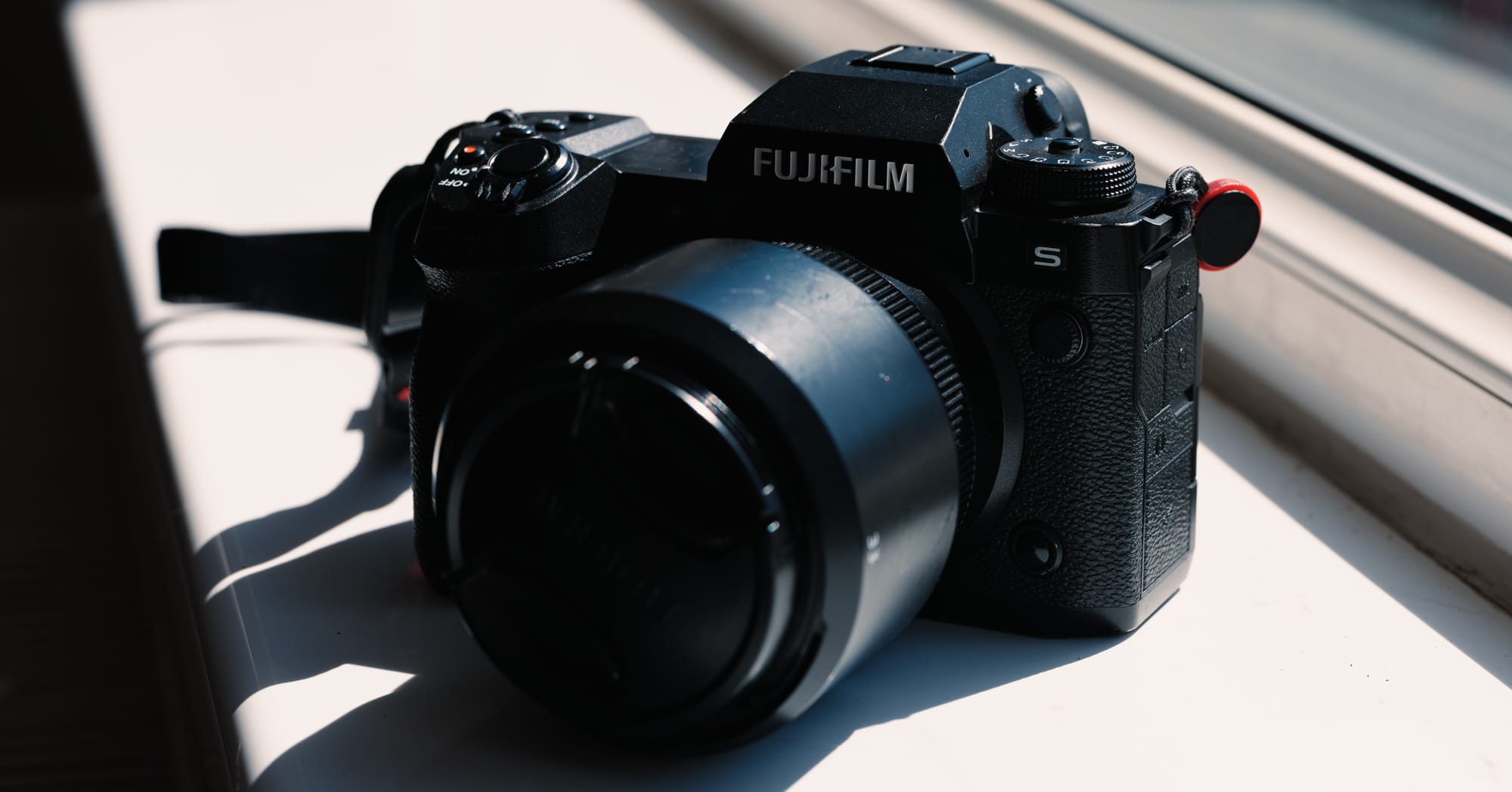
I did the usual thing, watch an ungodly amount of YouTube videos about cameras and which ones to buy etc. I distinctly recall one video stating just to go ahead and buy a full frame body, as that's what most people eventually do down the line. Seeing as I wasn't sure just how deep into the photography rabbit hole I would be going, I naturally held back from going full frame, and ended up getting the Fuji XH2s and the Fuji 33mm f1.4 APS-C set up. I almost got a Sony a6700 as it came very highly rated. However, I saw a YouTube film shot on the XH2s and there was just something about the colour science / cinematic quality of the video coming out of the XH2s vs Sony that swung it for me towards camp Fuji.
Buying the XH2s and Fuji 33mm f1.4 was a huge investment for me at the time (around £4000 if you include memory cards, batteries etc), so the idea of spending an even larger amount of money upfront (by going full frame) on a "hobby" that I had not even had the chance to test my commitment to, was a no no.
I bought the XH2s in May 2024 and absolutely hammered it with video and photos during the next two years. I've taken somewhere in the region of 40,000 photos with it and hundreds of videos. At first, coming in as a total newb, I was quite impressed with the images and video coming out of the body. However as time drew on, I realised that whilst the camera could hold it's own for video (it is after all a video centric camera with it's incredible high speed stacked CMOS sensor), the photos coming out were hit and miss for what I wanted and my own personal style of photography.
Adding the legendary red badge Fuji XF 50-140mm zoom lens into my line up, did in part, make up for the small sensor size, as that lens is an incredible piece of glass. However, over time, I found myself more and more frustrated when after doing many a portrait shoot, a lot of the photos just lacked that depth and sharpness that full frame photos had. A lot of contemporaries within my photography circle used full frame bodies, and it showed in the differences between their photos and mine.
Now I know the gap between full frame and APS-C has narrowed over the years; but for me, the gap was definitely there, and it was annoying the hell out of me. I just knew I needed to go to the next level when it came to image quality. Now, if I had got the XH2 instead (the high resolution sister of the XH2S), with it's 40MP sensor, I may have just stuck with that, who knows. For me though, the 26MP sensor (for photos) just wasn't doing it for me a lot of the time. Video was fine most of the time, I managed to get some great footage out of it, other times not so much.
So, there I went again, on a crazy quest to find a camera to upgrade to. Cue the endless hours of YouTube videos and article reading once again. There were a few issues though. Fuji don't do full frame, and I wasn't too keen on Sony. I did look into Canon, but there was one camera I kept coming back to which was intriguing me. That camera was the GFX100ii. I poured over hours and hours of written as well as YouTube reviews to see if this was the camera for me.
It soon became apparent from all the reviews that this camera was special. That huge sensor (not the largest, but in the top 4 in the world by size)......that image quality. The photos and videos that came out of it seemed next level, not only when compared to the XH2s, but even up against the best Sony, Canon and Nikon full frame bodies.
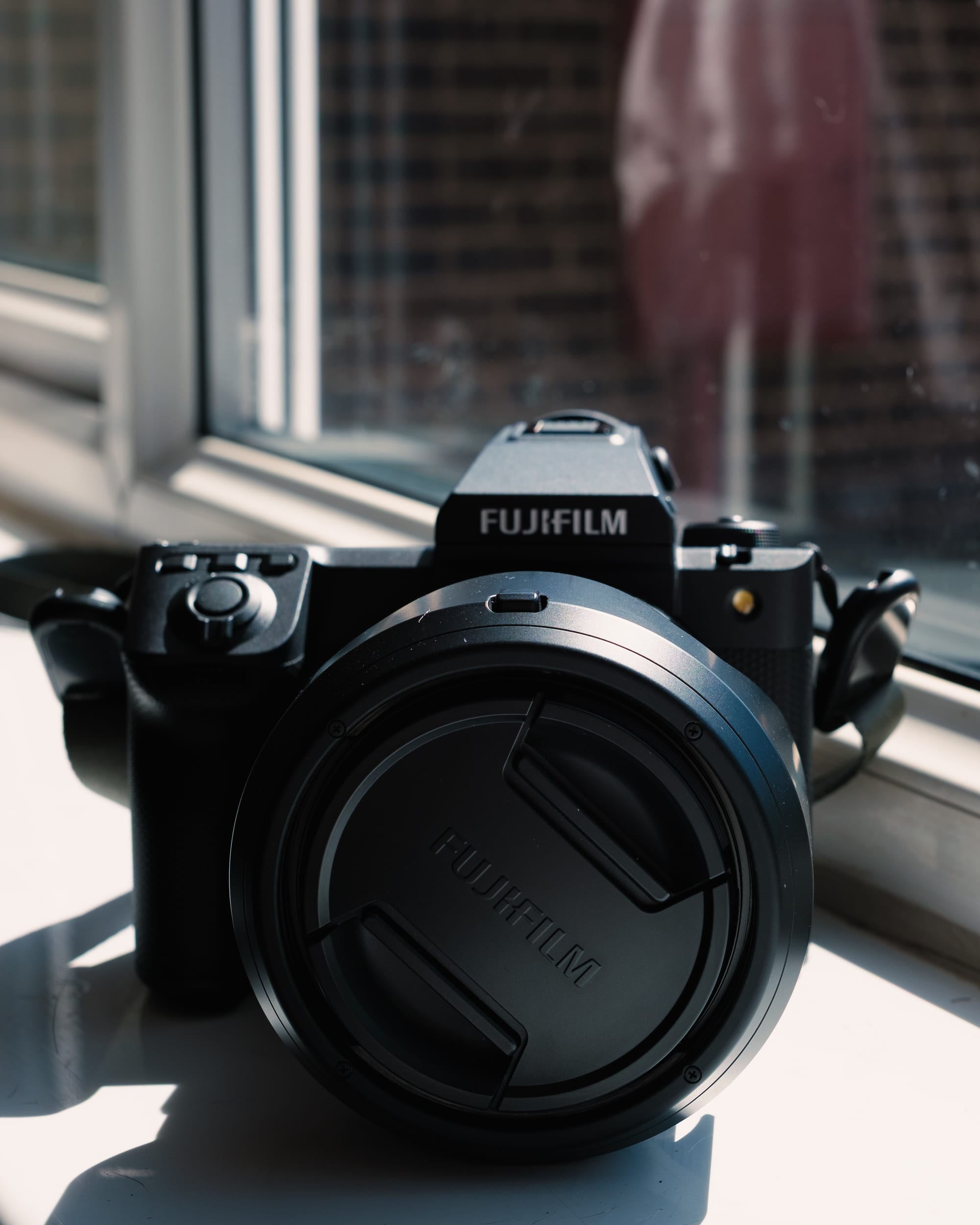
I kept thinking in the back of my head about the perceived negatives of the camera, namely the cost, the size and weight, and the slow autofocus. In the end however, the more I dug deeper, the more I realised that this was the camera that I wanted. I did seriously look at Leica, with the Q3 43 as well as the SL3, but I felt the GFX system just provided better value. I did look again at Sony, but despite their amazing autofocus, I just felt their cameras produced stills and videos that were too "digital" and clinical for my liking. I also seriously looked into the Canon R5 Mkii, but I just have this soft spot for Fujifilm colour science that kept drawing me back to them. (by the way the autofocus on Fuji systems is way better than what you think, maybe not quite up to Sony/Canon levels, but pretty close)
So after 6 months of saving money and torturing myself about different camera systems, I finally took the plunge and bought the GFX100ii + Fuji GF 55mm f1.7 (I mainly do portrait work). Jessops had a good offer on at the time, and Fuji were offering a really good cash back offer. I had used Jessops to buy my Fuji XH2s and had a good experience, so I decided to shop with them again.
Initial impressions, were "wow this is a huge, heavy camera". I had previously had one in hand in Harrods when I was trying out the Lecia Q3 43 (which by the way is the most beautiful camera I've ever held in my hand), and it seemed relatively light back then. One of the reasons why I got the GFX was because I already had Fuji batteries, CF Express Type B cards/readers, flash triggers etc, and I knew the menu system, I didn't want to spend months learning a whole new eco system or buying a new set of batteries and triggers etc.
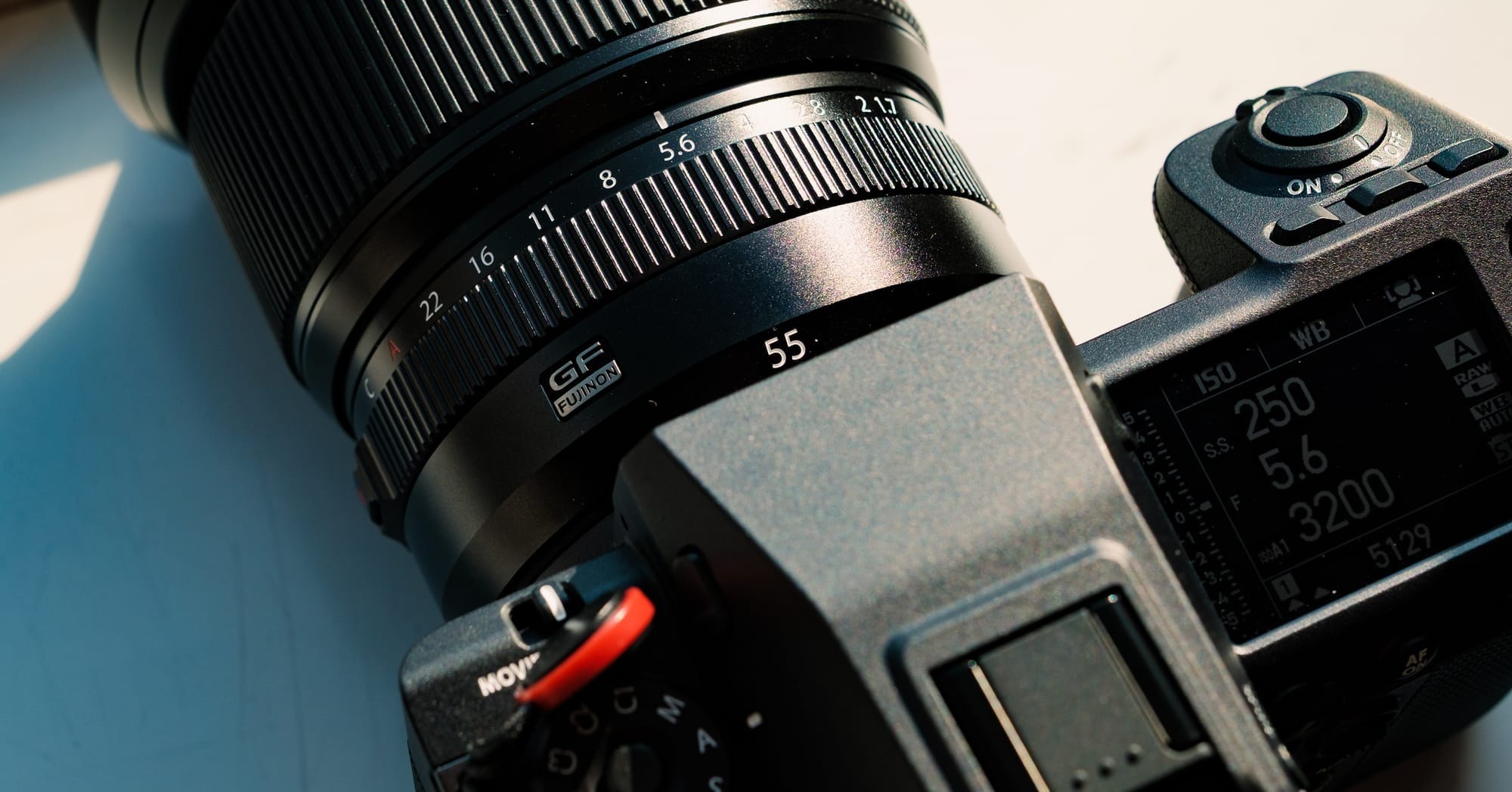
After about 30 minutes from unboxing, I pretty much had the camera set up the way I wanted, custom buttons and all. The menu was almost identical to that of XH2s, again validating my choice to get the camera. The build quality was pretty much on point for the price of the camera, the flip out screen in particular was a definite step up from the XH2s. I've not fully utilised all the features that the GFX has to offer, but one thing which was a game changer was the waveform display. No more guessing how to properly expose my F-LOG2c footage. (I have since bought an external monitor to use with both cameras should the need arise).
Talking of footage, from what little video I have taken with the GFX so far, the results are incredible. I experimented with a lot of formats, starting with the 5.8K Cine which people said was the sweet spot, but I've not yet worked out how to get it looking good. The normal 4K mode is supposed to be pixel binned, but from what I can see, it looks fantastic. Sometimes I found I had to wrestle with the XH2s footage to make it look good, yet the larger sensor on the GFX makes grading video footage so much easier.
Now moving onto stills....well what can I say. The quality is jaw dropping, just like all the reviews mentioned. In the shot at the top of the article I can zoom in and lose no quality, see for yourself:
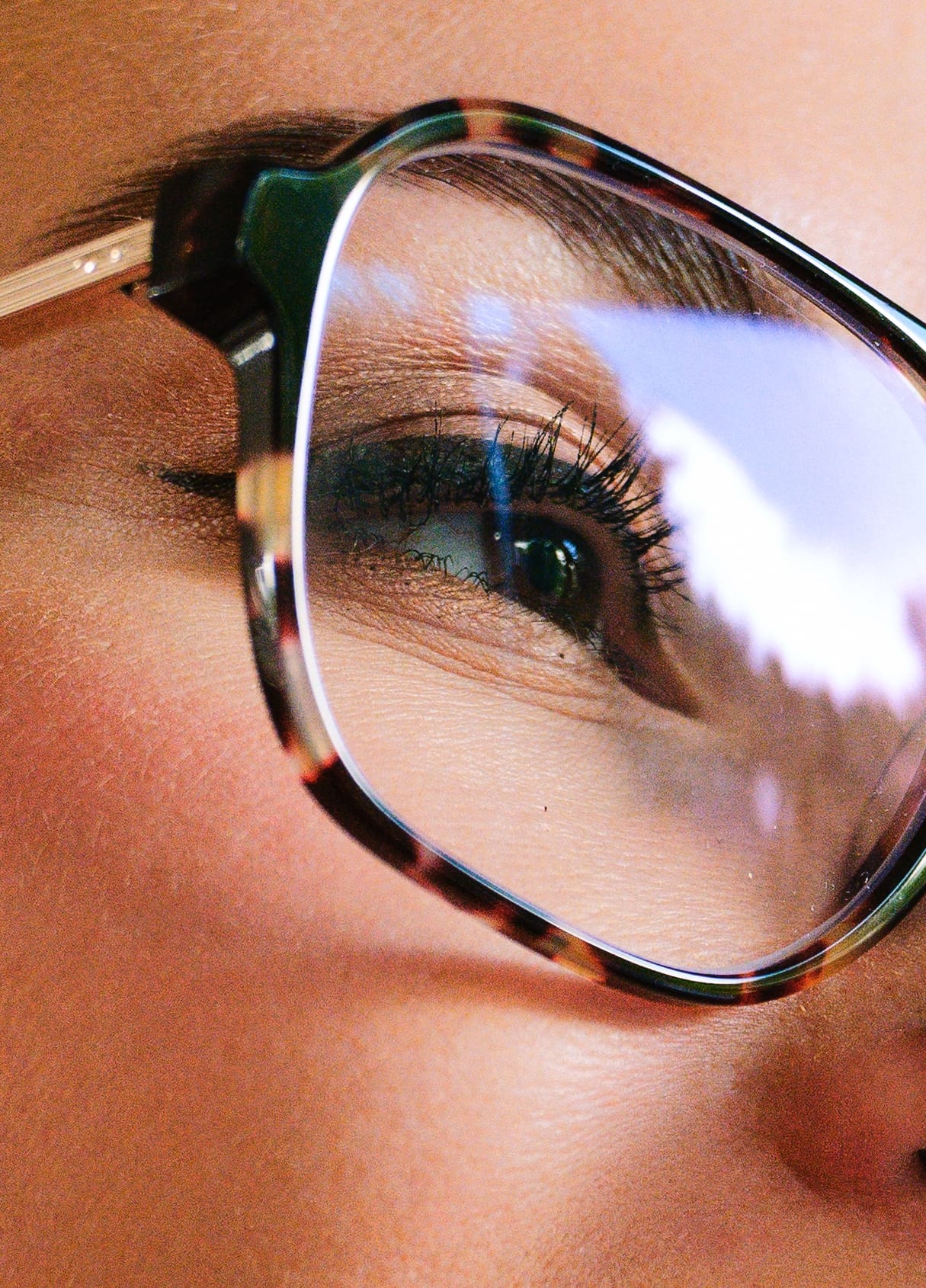
Coming from a 26MP crop sensor camera, I guess this should not be a surprise. It's not just the detail though, it's the highlight roll off, the depth of field, the tonal graduations, it's just all sublime.
A lot of reviews said the autofocus was slowish and the camera clunky in it's operation. Yes the AF is a bit slower than my XH2s but not by much, and that really shocked me. Also ,the eye AF works fantastic, my hit rate is easily around 80-90%. As for the speed of the camera, again, much faster than reviews would have you believe, in fact, it's only a bit slower than the XH2s.
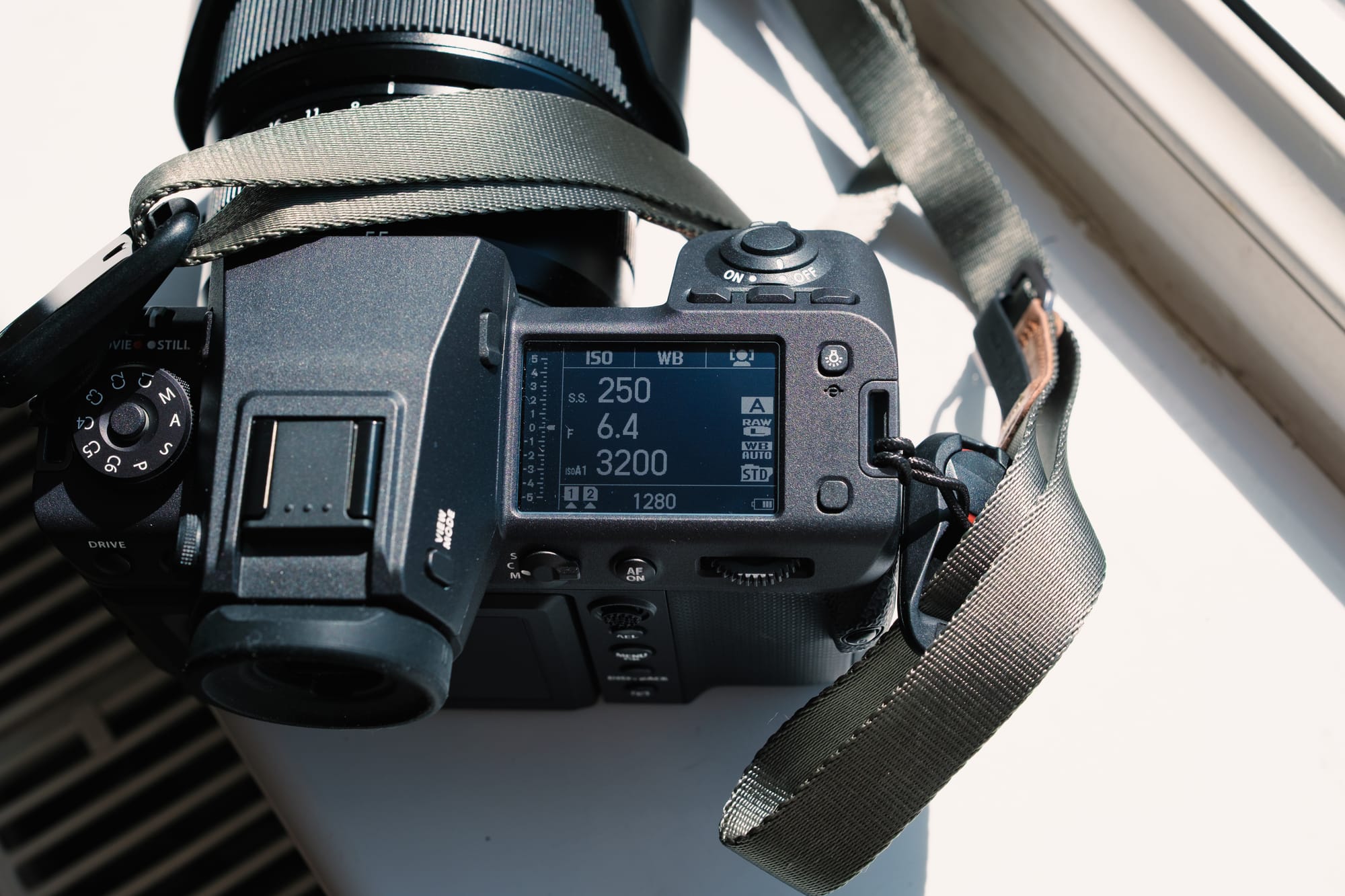
At first, I was a bit dubious as to the portability of the GFX100ii and the GF 55mm f1.7, but using a cross body strap makes it feasible. I'm only 5ft 6 and barely 60kg, but even I can get through a 3 hour street portrait shoot with little fatigue.


The GFX system definitely changes the way I shoot photos. Even before this, I had become a lot more intentional with my XH2s when it came to photos, I started to prioritise quality over quantity. When I first got the XH2s, I'd take 700 shots in a typical 3 hour portrait shoot (it is after all a high speed camera). I have since cut this down to around 300. With the GFX, it's the same story, I don't take a huge number of shots. For one, the files are huge (as you would expect from a 102MP sensor) and tw0, I hate culling/editing photos so I keep my volume to a minimum. I also find myself using the viewfinder a lot more in order to stabilise the huge sensor to maximise my chances of getting a sharp, in focus shot.
When I first got the GFX, I felt I had spend an unjustifiable amount of cash on the system (around £9000 for the camera body and lens combined). Yet, the more I use it, the more I realise it is completely worth the outlay. It is an incredible camera and I cannot wait to see what it can unleash over the months and years ahead.
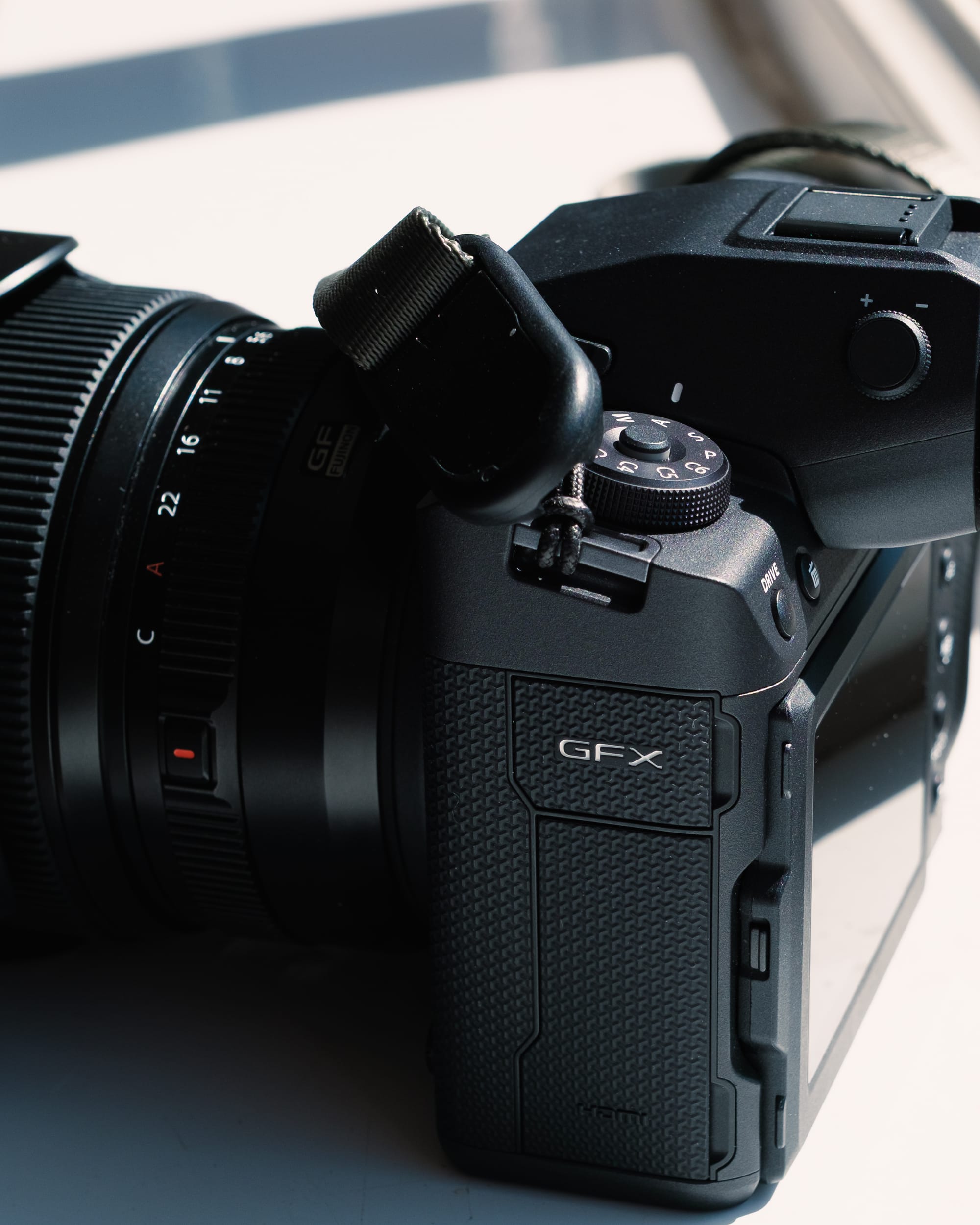
(Thank you to Jasmine High for being the first model to shoot with me on the GFX, Instagram link: https://www.instagram.com/jasminexhigh?igsh=czd3N2J0eXpmbHNx )